Showing posts with label containers. Show all posts

Wednesday, December 04, 2013

Gardening in the Winter? Yep.

     Although 'gardening' is probably not an activity many people think of in the winter, here are some gardening-like things to do while stuck in the doldrums of winter:

DECEMBER
  • Always keep a watering can full of water so that the water can be at room temperature. Don't shock your houseplants by watering with cold water.
  • When bringing poinsettias from the greenhouse to the car and the car to the house, be sure to protect them from the cold. They do NOT like the cold, not one bit.
  • If you have some hollies with berries, prune some to bring inside for decoration
  • If you planted a tree this fall, be sure to mulch it.  It's really important.
  • Fresh cut Christmas trees last longer and pose less fire hazard if you keep them well-watered while in the house.
  • Clay pots that look like this can be soaked in a mixture of 1 gal water: 1 cup bleach: 1 cup vinegar.  Soak them overnight then scrub the crud off.  
  • Wash the dust off houseplants.

JANUARY
  •  Seed time! Start germination tests on old seeds by wetting a paper towel. Place 10-20 seeds on the wet towel, fold or roll it up and place in a ziplock bag.  Remember to label the bag with seed name, cultivar or variety name, and the date you started the germination test. Place these in ambient temperatures and check weekly (or sooner). Poorly germinating seeds can then be discarded.
  • Consider purchasing a heating mat for germinating seeds.  This cuts germination time for many species in half and gets you a jump on things (especially if you run behind like I do).
  • For insect pests like mealybugs or whiteflies, you can spray insecticidal soap on houseplants.  Be sure to get very thorough coverage of the insecticide for best results.
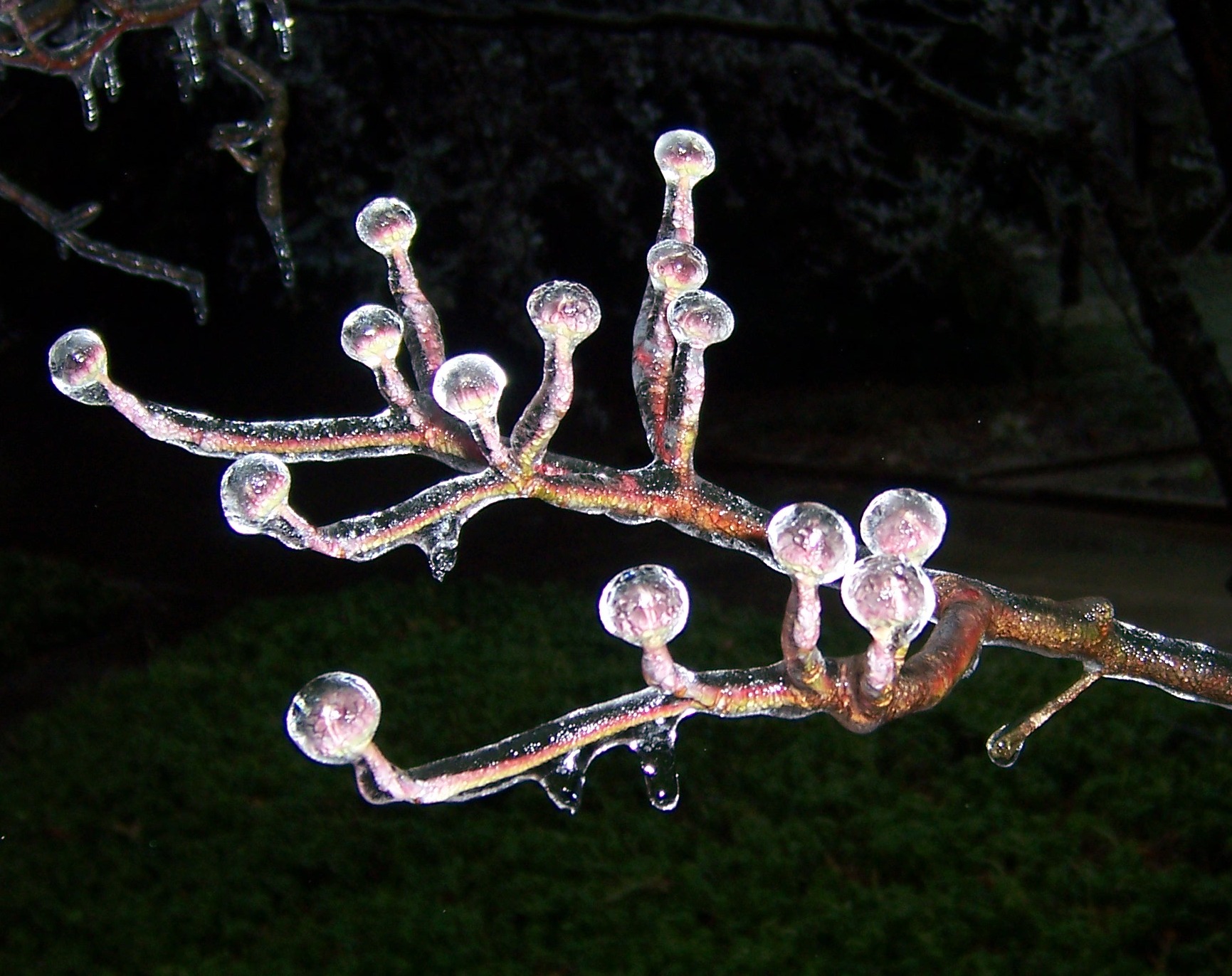
  • In the event of an ice storm, allow ice to melt off plants if possible.  If ice has broken a limb, go ahead and remove the branch to reduce further injury or tearing of the bark.
  •  Check on bulbs that you may have lifted, like dahlias, gladioloas, or cannas. Remove any rotting bulbs.
  • Feed the birds.  Black oil sunflower seeds will attract lots of different birds. Clean and refill feeders regularly.
FEBRUARY

  • Water evergreens if snowfall has been minimal this winter.
  • Cut back ornamental grasses before they begin to grow in March.
  • Mid-month, sow seeds of peas, larkspur, snapdragons outside now.  To bloom best, they must sprout and do much of their growing well before warm weather arrives.
  • If you need to control mites or scale insects, pick a warmish day above freezing to apply a dormant oil spray to your ornamental trees and shrubs.
  • Start onion seed during the first week of February, start broccoli, cabbage, and cauliflower seeds indoors during the 3rd and 4th week of February.
  • Start parsley and thyme seed this month as they take a long time to make a decent-sized transplant. Soak parsley seeds in water for 24 hours prior to planting.
  • Collect scion wood from apple and pear trees.  This is also the time to prune those trees. Store scion wood in moist paper towels or newspaper then seal in a plastic bag and put in the refrigerator until grafting time comes. Apples should not be in the same refrigerator as scion wood.
  • Fertilize fruit trees.
  • Repot rootbound houseplants.  Choose a new container that is only an inch or 2 larger in diameter than the old container.
  • Try forcing some cut woody stems like forsythia, pussy willow, pear, quince, crabapple, or cherry.  Pussy Willow


Check out the classes and other activities going on at the Pulaski County Cooperative Extension Service office! 

Tuesday, November 13, 2012

Daffodils

I will be the first to admit, daffodils are not my favorite flower.  In fact, I'm not sure how I would answer that question anyway, but it would not be with 'daffodil'.

But I am now addicted.  To daffodils.  Daffs, as the familiar call them.

But I can't afford them, at least not in the amounts I'd like.  So, as with some addictions, I'll take my daffs in small, annual doses.

Have you ever heard of the cyclamineus types of daffs?  They are distinctive because of their reflexed perianth segments (say that 3 times fast).  Here's one called 'Beryl':


And how about the jonquilla group? Heard of them?  Daffs in this group have multiple flowers per stem. Yes, multiple. And they have a fragrance!  Look at this one called 'Blushing Lady':


And there are the Poets (poeticus group).  They are distinguished by a spicy fragrance and dogwood-like bloom, this one is called 'Actaea':


There are so many more.  The miniatures, the doubles, the large cups, the small cups, the split-collars. And 99.99% of them are perfectly hardy in our Zone 6. 

So, get moving, as daffs like these are selling out quickly. The Children's Garden at the Pulaski County Library and the Pulaski County Extension office gardens will be blooming next spring with some of these wonderful daffs!

** pictures come from Brent and Becky's Bulbs website https://store.brentandbeckysbulbs.com/
** more information can be found at the American Daffodil Society

Friday, June 12, 2009

Carrots in Containers

Yep, I'm a weirdo. When it comes to plants, I try things that sometimes aren't normal. Most of the time I fail , but every once in a while, well, I hit the jackpot.


Look at these carrots I grew in a half-gallon milk jug. I can't remember when I sowed the seeds exactly but it was in the late winter. I thought 'What the heck', see if I can get a few fresh carrots from a windowsill. Truthfully, they've been sitting outside for about a month, but the germination and early growth was on a south-facing windowsill.

You'll notice some black holes in the container where there's still one carrot left -- that's where I pulled them from. My 2 kids were amazed, but we ate them last night along with new potatoes harvested from our compost pile! ha

Friday, June 05, 2009

Square foot gardening

I'm doing a couple of 4 x 4 foot square foot gardens at home. It's been interesting, to say the least. I've planted carrots, spinach (which has already been eaten/yanked), and fingerling potatoes.

The potatoes have been interesting to watch -- the Square Foot Gardening book (by Mel Bartholomew) says to plant 4 potatoes per square (12" x 12"). I barely covered them at first, then as they grew, I piled more and more soil mix/compost around them.There are 3 different varieties of fingerlings in this 4 x 4. It's weird how different potato plants can look.

Wednesday, January 09, 2008

Return from Meeting

January is a renewal time for horticulture crop growers. Seems like they all have conferences in early January. I attended the Kentucky Landscape Industries conference and the Kentucky Fruit and Vegetable Conference. Here's a very short list of a few things worth repeating from the conferences:

  • Get beyond geraniums as container plants -- use tropicals, use succulents, and arrange containers in your existing garden to stage those container plants
  • Don't fill a large container full of styrofoam peanuts to make the container less heavy. It may become top heavy. It's better to mix the peanuts throughout the medium. Makes sense, doesn't it?
  • If you're using woody plants in containers that will be left outdoors 12 months out of the year, you must choose plants that are hardy to zone 2 or 3
  • In Kentucky, don't be surprised if home-grown strawberries are available in late April instead of May. This is do-able in some regions in KY. Wow! I love that!
  • KY gardeners should use intermediate-day or 'day neutral' onion varieties to have the best luck in bulb formation and maturation. Soil sulfur content determines how pungent the onion will be.
Just a few tidbits of information to share with you.

Winter may be here, but speaking of onions, I'll be planting onion seed during this upcoming week. See -- it's already time to start gardening!