This interesting article comes from Lee Townsend, UK Extension Entomologist. We always attribute less insects with a harsh winter. Not so, he says. Read on:
Why are there So Many/Fewer _(Fill in the Name)_ This Year?
By Lee Townsend
Almost every year it seems that one or more species of insects are more/less abundant than “normal”. Sometimes increases are appreciated, as with lightningbugs or fireflies this summer. Just a few years ago, we were wondering why they were so scarce. On the other hand, increases in pests of crops, landscape plants, or humans can pose serious problems.
Weather, particularly temperature and rainfall, have major impacts on insect survival which can lead to significant increases (or decreases) in insect numbers from one year to the next. And, the effects are not consistent across species; conditions that allow some to thrive may be detrimental to others.
As a cold-blooded animal, insect development is accelerated or slowed depending upon temperature. A very warm spring can shorten the number of days required to grow from egg to adult. In turn, rapid development can reduce the length of exposure of vulnerable stages to predators so that a smaller percentage is eaten by natural enemies. It also can result in an extra generation of the insect. Longer warm periods also can mean species normally restricted to southern regions can move further north.
Rainfall amount and timing also plays a big role in insect population dynamics. Heavy spring rains leave areas wet for prolonged periods of time that favor some species. Increased nectar and sap flow is a boon to nectar gathers and sap feeders, including bees, butterflies, scale insects, and aphids. And, fungus-feeding insects benefit from an increased food supply. On the other hand, these same rains can wash small caterpillars and sap feeders off of plants to perish before they can find another host plant.
Weather also affects food abundance and quality from the insect’s perspective. The higher nutritional value of healthy, vigorous plants may result in more rapid insect development and more offspring per female. In some cases, plant development may be better synchronized with that of the insects that pollinate them or use them as some other resource. The impact of weather on some species can even be delayed. The apparent increased incidence in attacks of borers may be traced to the damage from past ice storms or droughts that stress, weaken, or kill trees and shrubs.
While temperature and rainfall have been identified as driving the population dynamics of many insect species, a myriad of factors other can be involved. In fact, the key factors governing survival and success are somewhat understood for only a few species. It is clear that only small increases or decreases in the relatively high mortality rate of most insects can lead to very big fluctuations in their numbers.
 Redosier dogwood (red-twig dogwood)
 Carolina sweetshrub
 Nikko Blue hydrangea on left, Annabelle on right
 American beautyberry
 American beautyberry fruit
 Asian species of beautyberry, fruits are much more prominent than the American!

 On pineapple sage
 Along the walkway
 In the yard (that's not cotton balls thrown out there!)
 Between hosta flowering stems
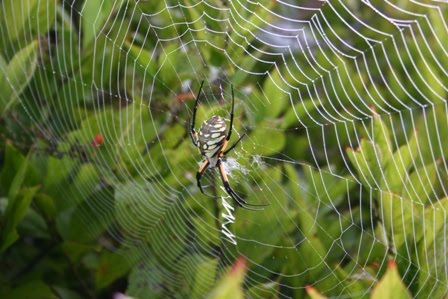 Good ol' garden spider (this was a BIG one)
 On the daphne
 Between coneflower leaves
 On boxwoods (there would be 7 or 8 webs per boxwood!)