Showing posts with label fruit trees. Show all posts

Wednesday, December 04, 2013

Gardening in the Winter? Yep.

     Although 'gardening' is probably not an activity many people think of in the winter, here are some gardening-like things to do while stuck in the doldrums of winter:

DECEMBER
  • Always keep a watering can full of water so that the water can be at room temperature. Don't shock your houseplants by watering with cold water.
  • When bringing poinsettias from the greenhouse to the car and the car to the house, be sure to protect them from the cold. They do NOT like the cold, not one bit.
  • If you have some hollies with berries, prune some to bring inside for decoration
  • If you planted a tree this fall, be sure to mulch it.  It's really important.
  • Fresh cut Christmas trees last longer and pose less fire hazard if you keep them well-watered while in the house.
  • Clay pots that look like this can be soaked in a mixture of 1 gal water: 1 cup bleach: 1 cup vinegar.  Soak them overnight then scrub the crud off.  
  • Wash the dust off houseplants.

JANUARY
  •  Seed time! Start germination tests on old seeds by wetting a paper towel. Place 10-20 seeds on the wet towel, fold or roll it up and place in a ziplock bag.  Remember to label the bag with seed name, cultivar or variety name, and the date you started the germination test. Place these in ambient temperatures and check weekly (or sooner). Poorly germinating seeds can then be discarded.
  • Consider purchasing a heating mat for germinating seeds.  This cuts germination time for many species in half and gets you a jump on things (especially if you run behind like I do).
  • For insect pests like mealybugs or whiteflies, you can spray insecticidal soap on houseplants.  Be sure to get very thorough coverage of the insecticide for best results.
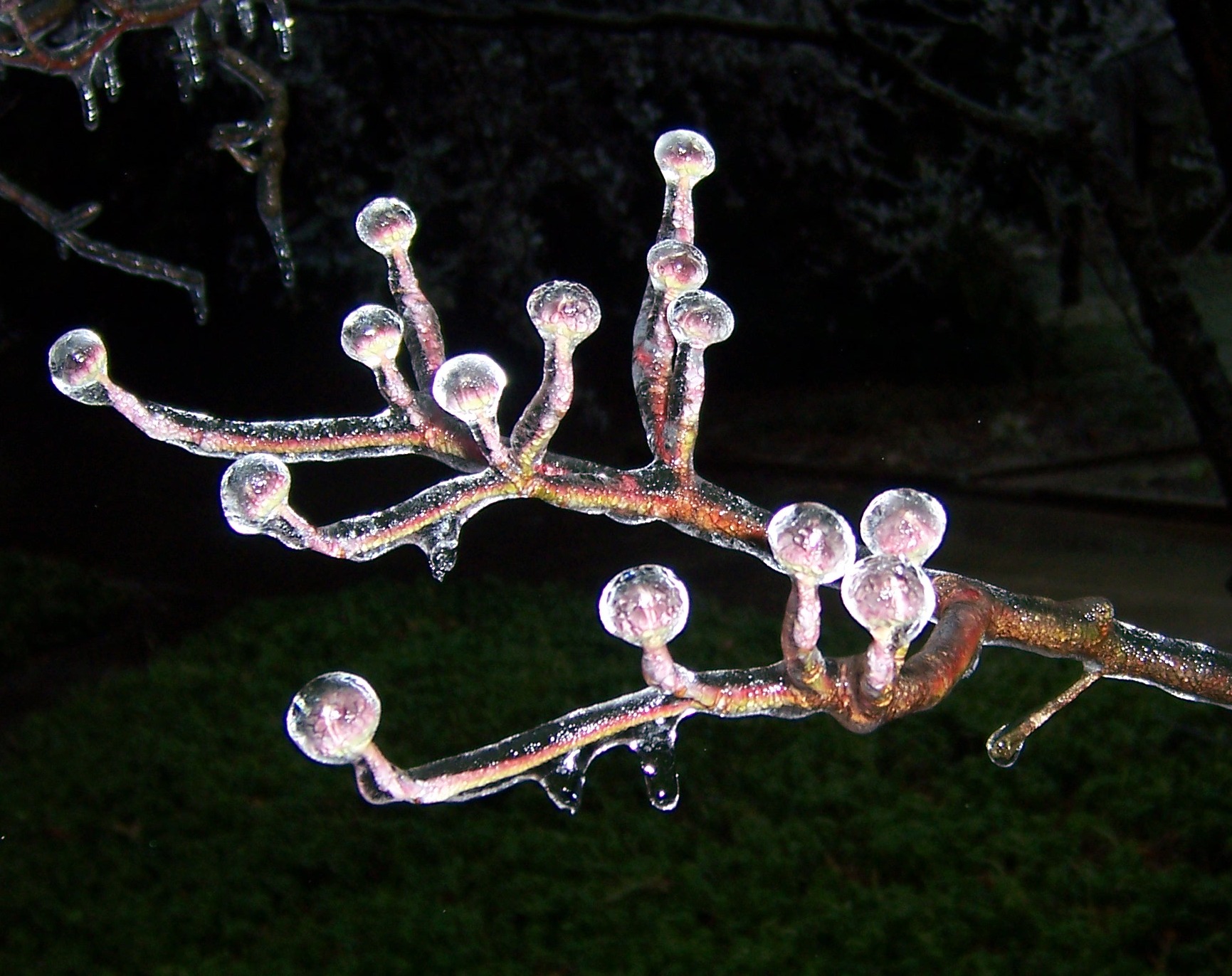
  • In the event of an ice storm, allow ice to melt off plants if possible.  If ice has broken a limb, go ahead and remove the branch to reduce further injury or tearing of the bark.
  •  Check on bulbs that you may have lifted, like dahlias, gladioloas, or cannas. Remove any rotting bulbs.
  • Feed the birds.  Black oil sunflower seeds will attract lots of different birds. Clean and refill feeders regularly.

FEBRUARY

  • Water evergreens if snowfall has been minimal this winter.
  • Cut back ornamental grasses before they begin to grow in March.
  • Mid-month, sow seeds of peas, larkspur, snapdragons outside now.  To bloom best, they must sprout and do much of their growing well before warm weather arrives.
  • If you need to control mites or scale insects, pick a warmish day above freezing to apply a dormant oil spray to your ornamental trees and shrubs.
  • Start onion seed during the first week of February, start broccoli, cabbage, and cauliflower seeds indoors during the 3rd and 4th week of February.
  • Start parsley and thyme seed this month as they take a long time to make a decent-sized transplant. Soak parsley seeds in water for 24 hours prior to planting.
  • Collect scion wood from apple and pear trees.  This is also the time to prune those trees. Store scion wood in moist paper towels or newspaper then seal in a plastic bag and put in the refrigerator until grafting time comes. Apples should not be in the same refrigerator as scion wood.
  • Fertilize fruit trees.
  • Repot rootbound houseplants.  Choose a new container that is only an inch or 2 larger in diameter than the old container.
  • Try forcing some cut woody stems like forsythia, pussy willow, pear, quince, crabapple, or cherry.  Pussy Willow


Check out the classes and other activities going on at the Pulaski County Cooperative Extension Service office! 

Wednesday, February 01, 2012

You Can't Stop an Early Spring

You know, I'm the first person who would like to see spring come early.  However, during the winter, if it's going to be cold, I like it to stay cold.

There is plenty of evidence of plants resuming growth during this stint of temperatures in the 50s.  Take a look at our daffs. 
Feb 1, 2012

Last year, our daffodils here at the office weren't at this stage until March 1.  A whole dang month.
March 1, 2011


In 2010, daffodils were at the stage they're at right now on March 9.  More than a dang month.

March 9, 2010
Even fennel is putting out new growth.
Fennel emerging Feb 1, 2012
Freezing temperatures are far from over.  I'm discouraged, especially for fruit growers.  Apple, pear, and peach buds are beginning to swell, making them less hardy.  Blackberries and raspberries will also start growing.  When flower buds are killed, fruit crops are gone.  Let's hope we get back to normal temperatures and stay there.  Or the flip side would be to stay warm -- I like that a little better!

Tuesday, August 10, 2010

Put Pruning Equipment Away

It's the time of year when I begin highly discouraging the use of pruners, loppers, saws, or any other implement used to cut woody plants. I usually tell people to just forget about pruning trees or shrubs from about the middle of August through leaf drop.

The why, if you think about it, is quite logical. Pruning sort of re-invigorates the plant. Makes the plant want to send out new shoots. If a little new shoot emerges below a pruning cut that's made September 1, it usually won't have time to produce wood and harden off completely before our first frost (about October 15). That makes for a dead little shoot.

Unfortunately, this dead shoot can then be the entryway for rotting organisms, like fungi or bacteria. Once they're in, they're in. And the rotting will begin.

The link above is UK's publication called 'Pruning Landscape Trees'. Here's the link to another called 'Pruning Landscape Shrubs'.

Monday, May 03, 2010

The Great Flood of 2010

We're living through it. And your gardens (and maybe basements) had to withstand the deluge. Thank goodness, we didn't have a BUNCH of vegetables out yet. However, here's a bit of advice, gleaned from Rosie Lerner, Extension Consumer Horticulturist from Purdue University:

For those who have actually had a chance to put in early cool-season crops, the issue of food safety from the garden is best handled with caution. Clearly, if floodwaters are contaminated with raw sewage, it is risky to eat the produce. Crops that can be washed thoroughly, peeled and/or boiled should pose minimal risks. However, crops that are eaten uncooked, especially leafy crops such as spinach and lettuce, will be more risky for consumption since it is so difficult to remove all of the contamination with just plain rinsing.

Newly planted seeds and transplants may not survive even short-term flooding, and seeds may have washed away. Resist the urge to replant immediately; give the soil a chance to dry out first. Working wet soil will have long-lasting effects of soil compaction.

As for landscape trees and shrubs, it is difficult to say what the long-term effect of being underwater will be. When soils are completely flooded, oxygen is prevented from reaching the root system. Certainly, some trees are more tolerant of waterlogged conditions, but the longer the lack of aeration, the greater the chance of root death. The general thought is that most landscape plants can survive being submerged for about a week or so. However, extended lack of aeration to the roots will result in root die-back, with the above-ground symptoms appearing as leaf yellowing, droopy foliage, leaf drop and, eventually, branch die-back. Waterlogged root systems are also more susceptible to attack by root-rot organisms. In areas of severe flooding, concerns for plant health also include soil erosion and deposits of additional soil and silt. Both can damage the root system.

In addition to the obvious damage to plants, there are more long-term effects to soils, which have been flooded for extended periods. Soil microorganisms that require oxygen may be killed and those that survive without oxygen take over, which in turn affects availability of nutrients for plant use. The soil structure itself may be physically harmed due to compaction of soil particles.

There isn't much you can do other than wait for drier weather to prevail and allow water to drain. As more favorable conditions return, watch for signs of die-back, but don't be too hasty to cut limbs. Branches that have lost leaves aren't necessarily dead; even though leaves may drop, there may be buds that will be able to re-leaf yet this summer. Live stems and buds will have some green tissue visible. Remove only those limbs that are physically damaged or obviously dead. A light fertilization may be helpful to replace nutrients that were lost and to encourage re-growth.

We may not know the full effect of flooding until long after the water recedes. And then, of course, a lot will depend on what future stresses the weather may bring upon our landscapes.

Tuesday, October 13, 2009

Bagging Apples

Ever heard of this? Apple bagging is simply placing individual apples inside bags while they are still on the tree. Bags are put on when fruit is about quarter-sized. Bags remain on til about 3 weeks before harvest. Bagged apples will not color up properly, so taking them off well before harvest is a must.

Why, why, oh why would anyone do this? Well, apples get plenty of disease and insect pests. Most backyard fruit growers do not want to apply lots of pesticides. So....by bagging fruit we are physically keeping the pest off the fruit without having to spray. An organic pest control method.

In addition to using the Japanese apple bags (from the website above), a UK entomologist gave me some nylons. Yes, there is anecdotal evidence that nylons (like what women slip on when trying on shoes) can work to deter pests.

I grow Liberty apple which is very disease resistant, but no apples are insect resistant. Here are my photos of bagged, nyloned, and not-bagged apples.


Pretty cool. But let me tell you, putting bags on apples is dang time consuming, especially the Japanese apple bags. Most of the bags I had put on had fallen off mid-season. The nylons were much easier to put on and did not tend to come off with bad storms and weathering.

The bagged apple was the biggest of the 3, shown below. And you can see what covered each of the 2 bagged apples.

Wednesday, February 28, 2007

The Joy of Pruning

Pruning apples, that is. Many people are totally confused about how to prune an apple tree. And to be honest, I wasn't real good at it. I'm not claiming I'm good at it now. I'm a little better.

Now is the time to prune apple trees -- really anytime before the buds start swelling. I pruned about 8 that I have at home yesterday on February 27. The prunings are where you get scion wood, which I need for a grafting workshop on April 3.

Anyway, here's a before and after shot of my Liberty apple tree. The tree is about 7 years old now. By the way, the sky was that blue yesterday -- wonderful!