Showing posts with label ornamentals. Show all posts

Friday, March 20, 2015

Trees You Wish You Had Planted

Spring is just about here and I'm one of those people who like different, unusual plants. I do not want to have what everyone else has. I think many of us are like that. 

The best estimate for the number of tree species in the world is 23,000 to 25,000. That means that we have more to choose from than just maples, redbuds, oaks, or Leyland cypresses.

I will be the first to admit that some of the trees I’m recommending will not be easy to find, nor will you have the choice of a 3” caliper tree. Many times you will have one option and that is a stick.  Let me enlighten you about sticks.

There is plenty of research that finds a smaller tree will establish faster (and less transplant shock) and grow faster in the first several years after planting than a large caliper tree.  Often, a tree planted when 24-36” tall will outgrow the same species tree planted as a much larger 2” caliper transplant and actually be larger in 5-10 years.

Also, please don’t settle for whatever the garden center or nursery has on site. Many times they can order the plant you want. Ask them to do it for you so they know you are not satisfied with what they have in stock.

The following is a list of some uncommon, small, tough landscape trees for around your home. This is certainly not an exhaustive list but these are some really interesting trees.

  1. Trident maple (Acer buergerianum) -- 20-30' tall, rounded form, fall color yellow-red, unique leaf shape, tolerant of heat, compacted soils, and pH, exfoliating bark
  2. Hedge maple (Acer campestre) -- 25-35' tall, rounded form, yellow fall color, ornamental seedpods, tolderant of drought, heat, compacted soils, and pH
  3. Paperbark maple (Acer griseum) -- 20-30' tall, rounded form, red fall color, exfoliating cinnamon-colored bark, trifoliate leaves, grows better in good soils
  4. Speckled alder (Alnus rugosa) -- 20-25' tall, upright form, minimal fall color, has ability to dry out wet areas, tolerates poor soils, fast-growing
  5. Serviceberry (Amelachier spp.) -- 15-25' tall, upright form, red-yellow-orange fall color, blooms early, edible fruit, pH-tolerant, some good selections are 'Autumn Brilliance' and 'Lustre'
  6. Devil's Walking Stick (Aralia spinosa) -- 10-20' tall, open and upright form, yellow fall color, tolerates heat and dry shade, suckering, has spines, compound leaves, lends tropical look
  7. Pawpaw (Asimina triloba) -- 15-20' tall, pyramidal (in full sun), yellow fall color, can be difficult to transplant, no fruit if only one tree, tropical-looking
  8. Sweet birch (Betula lenta) -- to 40' tall, upright form, great yellow fall color, reddish-brown papery bark, bruised stems emit wintergreen aroma
  9. American hornbeam (Carpinus caroliniana) -- 20-30' tall, rounded, irregular form, red-orange-yellow fall color, fluted bark looks like rippled muscles, tolerant of wet soils and pH
  10. Katsuratree (Cercidiphyllum japonicum) -- to 50' tall, upright, rounded form, yellow fall color, heart-shaped foliage, weeping form 'Amazing Grace' only 30' tall, fall leaves smell like cotton candy
  11. Amur maackia (Maackia amurensis) -- 20-25' tall, rounded form, no fall color, very attractive redish, exfoliating bark, compound leaves, dull white, pea-like flower in summer
  12. Persian parrotia (Parrotia persica) -- 20-30' tall, upright oval form, yellow-red fall color, exfoliating bark, unusual early spring blooms, pH tolerant, best upright form 'Jennifer Teates'
  13. Lacebark pine (Pinus bungeana) -- 30' tall. upright oval form, evergreen, exfoliating bark, often multi-trunked, drought and pH tolerant, 'Silver Ghost'
  14. Dragon's Eye Pine (Pinus densiflora) -- 20' tall, irregular form ,evergreen, variegated needles with 1-2 yellow bands, slow-growing

Friday, December 26, 2014

December's 25 Days of Superior Trees, Shrubs, and Perennials

People love lists. I love lists. So when December 1st rolled around, I made a decision to put together a list of trees, shrubs, and perennials for each of the days leading up to Christmas.  So here you go:
  1.  Weeping Norway spruce – living waterfall, yr-round interest, up to 15' tall 
  2.  Miyabe maple – small (up to 40’) tree, dense shade, yellow fall color, fruit produced in fall 
  3. Winterberry holly – deciduous holly, needs male pollinator, up to 15’, bees
  4.  Arrowwood viburnum – durable, adaptable, blue or black fruit, 6 to 15’ tall
  5. Weeping katsura – up to 25’ tall, Asian tree, redbud-like leaves, full sun to part-shade
  6.  ‘Rozanne’ Geranium – cranesbill geranium, makes 18” mound, purple-blue blooms June to frost
  7. Trident maple -- up to 35’ tall, tolerates everything you can throw at it, red/yellow fall color, exfoliating bark
  8. Weeping beech – up to 60’ tall, smooth bark, interesting form, esp winter, 
  9. Buttonbush – native, leggy shrub up to 10-15’ tall, bloom is curious, white and round, attracts pollinators & butterflies 
  10. ‘Fireworks’ goldenrod – clump-forming, non-invasive goldenrod, 3-4’ tall, attracts pollinators 
  11. Persian ironwood – nice, small tree, very attractive bark, yellow/orange/red fall color, red late-winter blooms
  12. Fothergilla – magnificent shrub, early white bloom, cultivars give reliable orange/red/yellow fall color, blue-green leaves, ‘Mt Airy’
  13. Sweet birch – native, 40-55’ tall, best fall color (yellow) of all birches, attractive, dark, shiny, bark, bruised stems emit wintergreen odor 
  14. Blazingstar – there are several and they are native, reliable, summer-blooming perennials that pollinators adore. 
  15. Butterflyweed or swamp milkweed – for the monarchs, these 2 are the showiest and least invasive 
  16. Green Panda Bamboo – not invasive, 6-8’ tall and equal width, protect from pm sun, used as single plant or hedge. 
  17. Kentucky coffeetree – native, KY Heritage Tree, large tree, suckers from root, male selections (no pods), dappled shade. 
  18. Blackgum – native, red fall color, 30-50’ tall, blue-black berries, glossy foliage, v.good honey tree  
  19. Purple Beautyberry – small shrub up to 5’ tall, most graceful of the beautyberries, metallic purple berries, also a white-berried selection. 
  20. Bottlebrush buckeye – part-shade to sun, suckering shrub, excellent foliage and flowers (white spikes), 10’ tall  
  21. Paperbark maple – trifoliate-leaved, cinnamon-brown exfoliating bark, orange-red fall color, 20-30’tall  
  22. Nordman fir – heat-tolerant, well-drained soils, 40-60’ tall, soft needles, conical evergreen, weeping & prostrate forms  
  23. Baptisia – white, purple, and yellow forms, some cultivars, perennial with 4 season appeal, handsome foliage, flowers, seedpods  
  24. Burkwood viburnum -- superior selection ‘Mohawk’, ornamental red flower buds precede fragrant white flowers, 7’tall and wide 
  25. Fringetree – small, native tree 15-20’ tall, white fragrant blooms, unrivaled when in full bloom, blue berries  
These plants were featured on my Twitter feed @hortagentbeth and facebook page.

Friday, November 14, 2014

Fothergilla -- Weird Name But Outstanding Plants

Fothergilla was actually named after a Quaker physician named John Fothergill. It is a member of the witch hazel family and includes 2 species, Fothergilla gardenii and F. major.

The genus has lived in obscurity despite the efforts of plantsmen like Michael Dirr and Harrison Flint.  However, once hybrids of the 2 species were created, fothergilla finally got some attention.

Fothergilla gardenii, dwarf fothergilla, is native to the coastal plains of North Carolina, Georgia, Alabama, and the Florida panhandle. It is low-growing (2-3' tall) and will sucker to an equal spread.

Leaves are blue-green. Blooms come in early spring before the leaves unfold. Bottlebrush-like flowers are white and have a honey scent. Fall color can be quite vibrant but will vary from plant to plant.

F. gardenii will not do well in alkaline, heavy soils. It does best in acidic conditions, well-drained but continually moist soils. It can be propagated by seed or with softwood cuttings.

Cultivars: 'Appalachia', 'Blue Mist', and 'Jane Platt'

Fothergilla major, large or mountain forthergilla, is a highland species native to the mountains of North Carolina, South Carolina, Tennessee, Georgia, and Alabama.

F. major is a large, multi-stemmed shrub that can grow 6 to 10' high.  The leaves are large and green.

Blooms typically in a landscape setting emerge at about the same time as F. gardenii. Blooms are larger than F. gardenii. Fall color is more reliably vivid.

F. major is more tolerant of stressful conditions so it is much better adapted to cultivation. It is cold hardy to USDA zone 4 and will tolerate heavier soils. The species can be propagated by softwood cuttings and seed, though seed production is much less than F. gardenii.

Cultivars: 'Arkansas Beauty' and 'Mystic Harbor'.

Fothergilla x intermedia  hybrids were created from crossing F. gardenii and F. major. Propagators selected for compact size, vigor, bloom, and fall color. These hybrids caught on fast in the 1990s when the selection 'Mt Airy' was introduced by Michael Dirr.

These hybrid fothergillas work best for the landscape as they have the best qualities of both parents. 'Mt Airy' is the standard by which all future hybrids will be measured.
'Mt Airy' in bloom in Somerset 4/13

'Mt Airy' fall color in Pulaski Co on 11/8/12

'Mt Airy' fall color in Pulaski Co on 11/14/14

Friday, September 26, 2014

Tulips!

I am getting extremely fond of bulbs, and why not? They need be planted only once and you get many, many years of returns.

Many of us have experience with tulips and many of our experiences are not that great. Generally what I hear is most of us only get a year's worth of bloom, then they are either weak or non-existent the following year.

However, if you pick the right species of tulip, I think you'll be as happy as gardeners are with daffodils (meaning: pretty dang happy).

Come to a class on tulips here at the Pulaski Co Extension office on October 2 at 6pm. The fee is $15 and if you pre-register, you will get to take home several of  the species tulips.

There are several species of tulips which should be considered for the home landscape in Kentucky.
  • Tulipa kaufmanniana  
  • T. fosteriana
  • T. greigii
  • T. clusiana 
  • T. sylvestris
  • T. praestans 
  • T. tarda
  • T humilis
  • T. bakerii
  • and many more! 
Darwin hybrids are big and bold and will last many years in the garden as well.
Here's a link to the University of Kentucky publication HO-80 'Spring, Summer, and Fall Bulbs'

All images from Brent and Becky's Bulbs.
T. kaufmanniana
T. praestans
T. clusiana

Wednesday, December 04, 2013

Gardening in the Winter? Yep.

     Although 'gardening' is probably not an activity many people think of in the winter, here are some gardening-like things to do while stuck in the doldrums of winter:

DECEMBER
  • Always keep a watering can full of water so that the water can be at room temperature. Don't shock your houseplants by watering with cold water.
  • When bringing poinsettias from the greenhouse to the car and the car to the house, be sure to protect them from the cold. They do NOT like the cold, not one bit.
  • If you have some hollies with berries, prune some to bring inside for decoration
  • If you planted a tree this fall, be sure to mulch it.  It's really important.
  • Fresh cut Christmas trees last longer and pose less fire hazard if you keep them well-watered while in the house.
  • Clay pots that look like this can be soaked in a mixture of 1 gal water: 1 cup bleach: 1 cup vinegar.  Soak them overnight then scrub the crud off.  
  • Wash the dust off houseplants.

JANUARY
  •  Seed time! Start germination tests on old seeds by wetting a paper towel. Place 10-20 seeds on the wet towel, fold or roll it up and place in a ziplock bag.  Remember to label the bag with seed name, cultivar or variety name, and the date you started the germination test. Place these in ambient temperatures and check weekly (or sooner). Poorly germinating seeds can then be discarded.
  • Consider purchasing a heating mat for germinating seeds.  This cuts germination time for many species in half and gets you a jump on things (especially if you run behind like I do).
  • For insect pests like mealybugs or whiteflies, you can spray insecticidal soap on houseplants.  Be sure to get very thorough coverage of the insecticide for best results.
  • In the event of an ice storm, allow ice to melt off plants if possible.  If ice has broken a limb, go ahead and remove the branch to reduce further injury or tearing of the bark.
  •  Check on bulbs that you may have lifted, like dahlias, gladioloas, or cannas. Remove any rotting bulbs.
  • Feed the birds.  Black oil sunflower seeds will attract lots of different birds. Clean and refill feeders regularly.

FEBRUARY

  • Water evergreens if snowfall has been minimal this winter.
  • Cut back ornamental grasses before they begin to grow in March.
  • Mid-month, sow seeds of peas, larkspur, snapdragons outside now.  To bloom best, they must sprout and do much of their growing well before warm weather arrives.
  • If you need to control mites or scale insects, pick a warmish day above freezing to apply a dormant oil spray to your ornamental trees and shrubs.
  • Start onion seed during the first week of February, start broccoli, cabbage, and cauliflower seeds indoors during the 3rd and 4th week of February.
  • Start parsley and thyme seed this month as they take a long time to make a decent-sized transplant. Soak parsley seeds in water for 24 hours prior to planting.
  • Collect scion wood from apple and pear trees.  This is also the time to prune those trees. Store scion wood in moist paper towels or newspaper then seal in a plastic bag and put in the refrigerator until grafting time comes. Apples should not be in the same refrigerator as scion wood.
  • Fertilize fruit trees.
  • Repot rootbound houseplants.  Choose a new container that is only an inch or 2 larger in diameter than the old container.
  • Try forcing some cut woody stems like forsythia, pussy willow, pear, quince, crabapple, or cherry.  Pussy Willow


Check out the classes and other activities going on at the Pulaski County Cooperative Extension Service office! 

Friday, January 18, 2013

Old Seeds and Jack (you have to read to the end)

This is not a post about doing germination tests on your old flower or vegetable seeds.  This is a story of forgetfulness.

Back in the fall of 2010, I was hiking at the Yahoo Falls area in McCreary Co, KY.  Great place to hike by the way.  I collected some seed from a cucumber magnolia.  I absolutely love our native deciduous magnolias!  I gathered between 15 and 25 seeds.

When I got home, I did the thing that all horticulturists know to do with those temperate woody tree seeds, and that's stratify them.  In order to germinate, these guys have to go through a cool, moist period of a certain length.  Only after that will the seeds germinate.

So, as a good horticulturist, I got my ziplock bag and filled it with moist vermiculite, stuck my seeds in, and crammed them in the back of my fridge.  Never to be looked at until again December of 2012.

That does tend to happen...forgetting what you've stuck in the fridge, especially waaaay in the back.

I found the bag, inspected the contents, and the seeds had indeed germinated in the bag.  That was expected.  I gently tugged the individual plants out. The root systems weren't any longer than maybe 2" and some were nicely branched and white as can be - a healthy root.  The seed case still enclosed the cotyledons.

I didn't have much hope that those cotyledons would be intact. I figured they'd be rotted.  Anyway, I potted up 6 of the most promising little seedlings. I watched them green up (they were little albinos in the bag). I watched them bend toward light sources.  But the seed cases were hanging on and wouldn't release the cotyledons.

Two seedlings a day or 2 on the counter after their 2-year stint in the fridge
 
So, I opened them up by hand. They were a little crispy, somewhat hard.  I messed up one of the plants, tore the whole plum thing off.  But the other 5 look promising.

The most promising seedling, you can see its first true leaves between the cotyledons
Ragged cotyledons on another 2 seedlings, but I have high hopes
The cotyledons aren't terribly pretty, a little ragged.  In two of the 5, I even see very, very small first true leaves!  I feel like a proud mama (who neglected her children for 2 years)!  But I think they're going to be OK. I truly don't know why I even gave them a shot, I normally would have just thrown the bag with the seeds out after being in the fridge that long.

Just goes to show you, when you think you know it all about plants, you don't know jack.

Tuesday, December 18, 2012

12 New Annuals

In honor of last week's date of 12/12/12, in this 2nd week, we'll be talking about 12 new annuals/perennials for home landscapes.  Last week I listed 12 fruits and vegetables.

12 New or Different Annuals and Perennials to try in 2013
(A) designates annual, (P) perennial
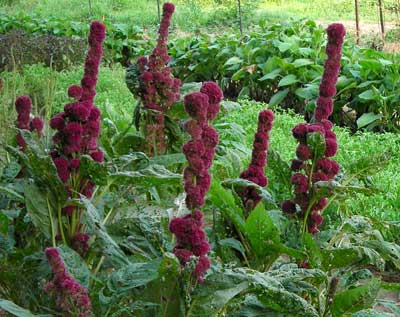
  1. Amaranth -- 'Love Lies Bleeding' is very cool. And if you want some art in the garden, try the very sculptured-looking 'Elephant Head' (A)
  2. Hyacinth bean -- need a vine for summer/fall only to block that western sun? Grow this lovely plant with very cool-looking seeds. Even dried pods look good. (A)
  3. Black-eyed Susan -- these have been around forever, but they perform! 'Indian Summer' is a good choice, 'Goldilocks' is a double. (P)
  4. Zinnias -- these just make me smile, remind me of my grandmother. They are easy and will self-sow somewhat. Butterflies love them. Profusion or Zahara series are recommended. (A)
  5. Ornamental peppers -- my fave 'Numex Twilight', but so many others like 'Black Pearl' and the miniature 'Medusa' (A)
  6. Sunflowers -- I know they're popular, but try some of the pollenless varieties. And remember to bring them inside so you can admire them. (A)
  7. Sun coleus (A)
  8. Papyrus -- 'King Tut' or 'Baby Tut' love water and were used at the Children's Garden & here at our office in containers. Brings some interesting texture to the garden. (A)
  9. Any Liatris (blazingstar) (P)
  10. Any Baptisia (false blue indigo) -- a misnomer now since there are yellow varieties of this (P)
  11. Bulbs -- ornamental alliums, daffodils, species tulips, or lilies are recommended (P)
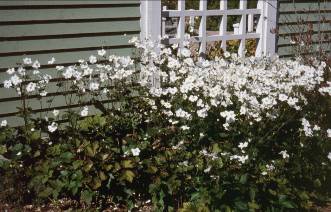
  12. Japanese anemone -- these late summer and fall bloomers are overlooked way too much. Team it up with some asters and you've got a great display (P)
You'll notice that some of these are old, really old.  But they're still good.

Amaranth, Elephant Head FLOWER 0.15 g - Click Image to Close
Elephant Head amaranth


Hyacinth bean


'King Tut' papyrus
Numex Twilight ornamental pepper

Japanese anemone

Tuesday, November 13, 2012

Daffodils

I will be the first to admit, daffodils are not my favorite flower.  In fact, I'm not sure how I would answer that question anyway, but it would not be with 'daffodil'.

But I am now addicted.  To daffodils.  Daffs, as the familiar call them.

But I can't afford them, at least not in the amounts I'd like.  So, as with some addictions, I'll take my daffs in small, annual doses.

Have you ever heard of the cyclamineus types of daffs?  They are distinctive because of their reflexed perianth segments (say that 3 times fast).  Here's one called 'Beryl':


And how about the jonquilla group? Heard of them?  Daffs in this group have multiple flowers per stem. Yes, multiple. And they have a fragrance!  Look at this one called 'Blushing Lady':


And there are the Poets (poeticus group).  They are distinguished by a spicy fragrance and dogwood-like bloom, this one is called 'Actaea':


There are so many more.  The miniatures, the doubles, the large cups, the small cups, the split-collars. And 99.99% of them are perfectly hardy in our Zone 6. 

So, get moving, as daffs like these are selling out quickly. The Children's Garden at the Pulaski County Library and the Pulaski County Extension office gardens will be blooming next spring with some of these wonderful daffs!

** pictures come from Brent and Becky's Bulbs website https://store.brentandbeckysbulbs.com/
** more information can be found at the American Daffodil Society

Thursday, March 22, 2012

Redbud Bloom Over the Years

Here are various pictures and dates of redbuds in bloom over the years either at the Children's Garden at the Pulaski Co Library or at the Pulaski Co Extension Office.

3/20/12

4/11/11

4/10/10

4/14/09

4/11/08


3/28/07 -- Easter freeze came and killed everything 4/5/07

3/28/07

These pictures chronicle our 'normal' bloom time over the last 5 years.  Or maybe late March is the new normal.  We are very, very likely to have a killing frost over the next 4 to 5 weeks.  Just keep that in mind as you are planning and planting your garden.

Be prepared to cover tender plants.  Strawberries are blooming.  There will be strawberries in April at the rate we're going.  Brambles have broken bud.  Any freeze will knock out berries for this year.  Peaches are beginning to bloom and apples aren't that far behind.

I'm not sure what I will do if there are no Kentucky peaches this year....I can eat my weight in them!

Saturday, February 25, 2012

Turf Short Course Part 2

Dr Tim Phillips presented a talk on roses at the Turf Short Course during the landscape track.  Dr Phillips is a fescue breeder at UK, but his sideline is roses.  He's in charge of the rose garden at the UK Arboretum.  Here are some tidbits from that talk:
  • There are over 1700 varieties of roses at the Arboretum
  • Knockouts came on the scene in 1999
  • AARS (All America Rose Selections) have conducted no-spray trials for a number of years, winners have had no fungicides or insecticides sprayed.  Here are some of the winners:
  • Cheap roses from box stores -- 80% of the time they are mislabeled or have rose mosaic virus
  • Roses do much better in the sun, minimal amount if 4 hrs sun each day for OK flowering
    • 8 hours of sun per day -- you get twice as many roses than at 4
    • 12 hrs of sun per day -- get more flowers but individual flowers don't last as long, may bleach out color
  • If planting bare-root roses, do not skip this step -- soak roots for 24 hours before planting
  • Don't prune weak plants as hard as you might robust plants
  • Climbers should be pruned after they are done flowering, usually around late June
  • Roses do not like wilting at all
  • After a couple of freezes (<25F), trim roses back to 2-4' tall
  • Rose rosette is becoming a huge problem.  Be on the lookout and prune out early, otherwise it will become systemic and you must remove the entire plant

Tuesday, May 03, 2011

Redundant Rose Rosette

    Knockout Roses have been all the rage for the last few years.  Even as a non-rose person, I have been impressed.   No black spot (or very little) and pruning?  Prune whenever you feel like it!  The plants will live and bloom and bloom and live!
     However, like all good things, they must come to an end.  Case in point:  Several calls and many rose specimens in the disease diagnostic lab with weird, red, thorny growth. 
     All the Knockouts here at our office were removed due to this problem, a disease problem.  You might say ‘How?  Knockouts are disease resistant!’. 
     Nope, sorry, they are not resistant to rose rosette.  
     Symptoms. This lethal disease affects all weedy and cultivated roses. Earliest symptoms include increased growth of shoots with red coloration and distortion and dwarfing of leaves (Figure 1). Affected shoots appear to be more succulent than normal and they develop a proliferation of thorns (Figure 2). This abnormal overabundance of thorns is a useful field symptom for diagnosis, because the new shoots of many roses are naturally reddish colored. Diseased shoots are not winter-hardy and will produce few blooms or flowers may be deformed. Infected plants produce fewer roots than normal. The disease progresses to the rest of the plant until all the new growth is affected and the plant declines or is killed in winter. Roses may succumb in just one season, or symptoms may continue for another season or two.

     The cause of rose rosette disease was thought to be a virus, but recent research suggests that a phytoplasma infection is responsible for the symptoms. In nature, it is spread by a tiny eriophyid mite.

     Disease management. Infected plants must be removed and destroyed so that the pathogen is not spread to healthy plants nearby. Care must be taken to avoid scattering disease-carrying mites to the other plants. Early detection is essential. Rose rosette disease is normally systemic in the plant, but at the first indication of infection on a shoot, it might help to clip off the affected shoot in hopes that the rest of the plant is still unaffected. Multiflora rose could be a reservoir for the disease so they should be removed from the neighborhood of cultivated roses.


Friday, May 28, 2010

Knockout Roses -- Yes They Can Have Problems!

Here at the Pulaski Co Extension office we have about 5 pink single Knockout roses and 5 double Knockouts planted. Last year I saw this problem and stupidly did not remove the plants. This year, the problem is here again!


This is called rose rosette virus. It is incurable and terminal. It's best to remove affected plants to protect others from getting the virus. It is transferred via mites.

Sorry plants, but y'all are outta our garden!

Friday, January 15, 2010

Getting Educated Horticulturally Speaking

I came back from the Kentucky Nursery and Landscape Association Conference a little wiser than I was before. Here's a few tidbits of interesting horticulture information:
  • The infamous Callery pear was an introduction from the USDA Lab in Beltsville MD. Shame on them. Invasive pears are now ubiquitous around Washington DC. The Mama plant at the lab had to be cut down -- guess why? -- it was falling apart.
  • For every 1.8 degree F increase in temperature, our electricity use increases 2.4%. Urban trees are great at cooling the environment and should be used to help reduce energy consumption.
  • Sadly, budgets for urban forestry programs are down 40%
  • The US has the greatest diversity of ash in the world (and watch out, here comes emerald ash borer)
  • The Chicago Botanic Garden was built on a swamp and had to built up in a series of islands. They have a new building which is covered with rooftop gardens which are accessible to the public.

Friday, October 02, 2009

Lovely Artichokes

Nope, artichokes are not my favorite food. Nor are they something we grow in Kentucky.

But....they are such cool-looking plants!


The leaves look like they would feel rough but it's just the opposite. The long, downy hairs on the leaf make it very soft.


They'll never make an artichoke but I could care less. They are beautiful!